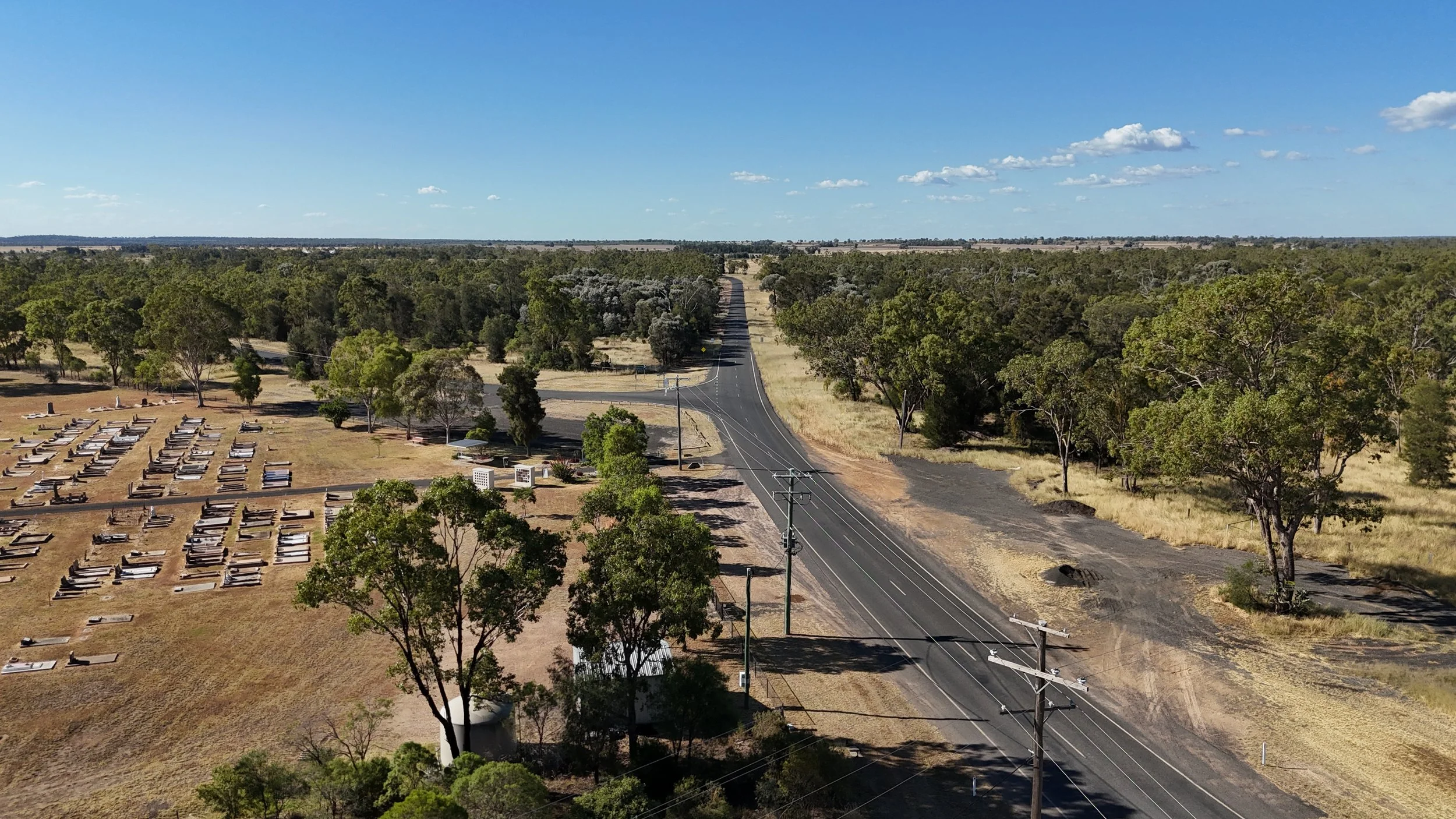
Return To Home (RTH) Doesn't Always Mean Safe — Why Your Emergency Plan Could Be Your Biggest Hazard
Return to Home sounds like a safety net. Near obstacles, it can be anything but. The question isn't whether your drone can RTH — it's what happens on the way up.
Most pilots set their Return to Home altitude once during initial setup and never revisit it. Eighty metres feels safe. Comfortable. Enough clearance for almost anything.
Until you're flying near a structure with a guide wire you can't see from the ground, or close to powerline infrastructure, and something goes wrong.
The aircraft doesn't know what's between it and 80 metres. It just climbs.
When RTH triggers — whether from signal loss, low battery, or operator command — most aircraft will ascend vertically to the programmed RTH altitude before navigating home. That vertical climb is where the hazard lives. A guide wire at 25 metres. A powerline at 40 metres. A communication mast guy-wire that isn't on any map.
The aircraft doesn't hesitate. It doesn't scan. It climbs.
This is why emergency planning for obstacle-proximate operations requires deliberate, site-specific thinking — not a default altitude set months ago on a different aircraft in a different location.
For many obstacle-proximate scenarios, hover-in-place is a safer emergency behaviour than RTH. A hovering aircraft gives the operator time to assess and respond. An aircraft climbing blind through an unsurveyed vertical corridor does not.
Before flying near any structure — buildings, towers, trees, powerlines, fences, antennae — the question to ask is simple: if RTH triggers right now, what does this aircraft fly through on the way up?
If you can't answer that with confidence, the emergency plan needs revisiting before the aircraft leaves the ground.
This kind of thinking comes naturally when your background includes working around high-voltage infrastructure. You learn quickly that the hazard isn't always where you're looking — it's often directly above you.
// OPERATOR TAKEAWAYS
Review RTH altitude for every new site — don't rely on a global default
Survey the vertical corridor above your operating area, not just the horizontal one
Near obstacles, consider hover-in-place as your emergency behaviour instead of RTH
Guide wires, guy-wires, and powerlines may not appear on maps — walk the site
Ask before every flight: if RTH triggers now, what does the aircraft climb through?